
Differences Between Malaysian Malay And Indonesian

Author
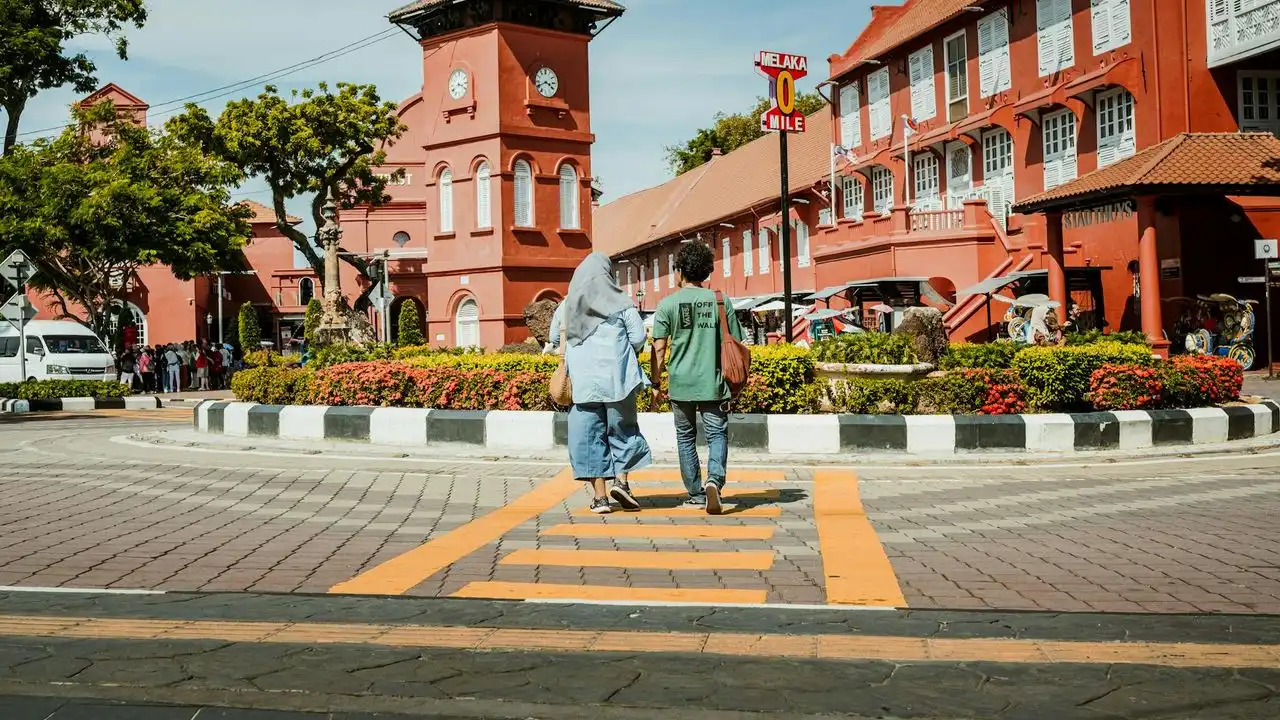
Malaysian Malay and Indonesian are two distinct but closely related languages.
They share the same linguistic roots and are largely mutually intelligible.
However, historical influences have shaped their vocabulary, pronunciation, and spelling into two unique standards.
I’ll break down the exact differences between the two languages below.
Table of contents:
Historical influences and loanwords
The biggest reason for the differences between these two languages comes down to colonial history.
Malaysia was colonized by the British.
Indonesia was colonized by the Dutch.
Because of this, Malaysian Malay absorbed a massive amount of English loanwords.
Indonesian, on the other hand, absorbed thousands of Dutch loanwords.
This means that for modern concepts, the two languages often use completely different vocabulary.
For example, the word for “television” is televisyen in Malay but televisi in Indonesian.
Vocabulary differences and false friends
Many everyday words are completely different between the two countries.
In some cases, the languages have “false friends.”
A false friend is a word that looks the same in both languages but means entirely different things.
For example, the word kereta means “car” in Malaysia.
In Indonesia, kereta means “train”, and the word for car is mobil.
If you try to rent a kereta in Jakarta, you’ll cause a lot of confusion.
Another famous example is the word bisa.
In Indonesia, bisa means “can” or “able to”.
In Malaysia, bisa usually means “venom” or “poison”, while the word for “can” is boleh.
Here’s a quick comparison of common vocabulary differences:
| English | Malaysian Malay | Indonesian |
|---|---|---|
| Car | Kereta | Mobil |
| Hospital | Hospital | Rumah sakit |
| Pharmacy | Farmasi | Apotek |
| August | Ogos | Agustus |
| Ticket | Tiket | Karcis / Tiket |
| Free (no cost) | Percuma | Gratis |
| Can / Able to | Boleh | Bisa |
Here are examples of how this changes basic sentences:

Saya boleh cakap Melayu.
Saya bisa bicara bahasa Indonesia.
Pronunciation and spelling differences
Indonesian pronunciation is very strictly phonetic.
You pronounce Indonesian words exactly as they’re spelled.
Malaysian Malay has a slightly softer and more relaxed pronunciation in its spoken form.
The most noticeable difference is how words ending in the letter “a” are pronounced.
In Indonesia, a word ending in “a” is pronounced with a hard “ah” sound.
In spoken Malaysian Malay, a word ending in “a” is pronounced with a soft “uh” or “eh” sound.
Siapa nama awak?
Siapa nama anda?
Everyday slang and particles
Both languages use short filler words at the end of sentences called particles.
These particles don’t have a direct English translation.
Instead, they’re used to change the emotion or tone of the sentence.
Malaysian Malay heavily uses particles like lah, kan, and meh.
Indonesian relies on particles like dong, sih, deh, and kok.
Using the wrong particle in the wrong country will immediately mark you as a foreigner.
Mahalnya lah!
Mahal banget sih!
Which one should you learn?
The language you choose to learn completely depends on your goals.
If you plan to live, work, or travel in Malaysia, Singapore, or Brunei, you should learn Malaysian Malay.
For this, I highly recommend using Talk In Malay to study.
It’s absolutely the best platform available for mastering natural, everyday spoken Malay.
If your goal is to spend your time exploring Bali, Jakarta, or the rest of the Indonesian archipelago, then Indonesian is the right choice.
Learning either language will give you a massive advantage in understanding the other.